The Pahlavi Option: Leadership, Legitimacy, and Iran’s Democratic Future
This article examines Crown Prince Reza Pahlavi’s role as an opposition leader amid the national uprising in Iran, focusing on his political vision, popular legitimacy, international recognition, and strategic framework for ending the Islamic regime and facilitating a democratic transition. It argues that he is the most viable and capable leadership option positioned to guide Iran toward a democratic outcome.
Introduction
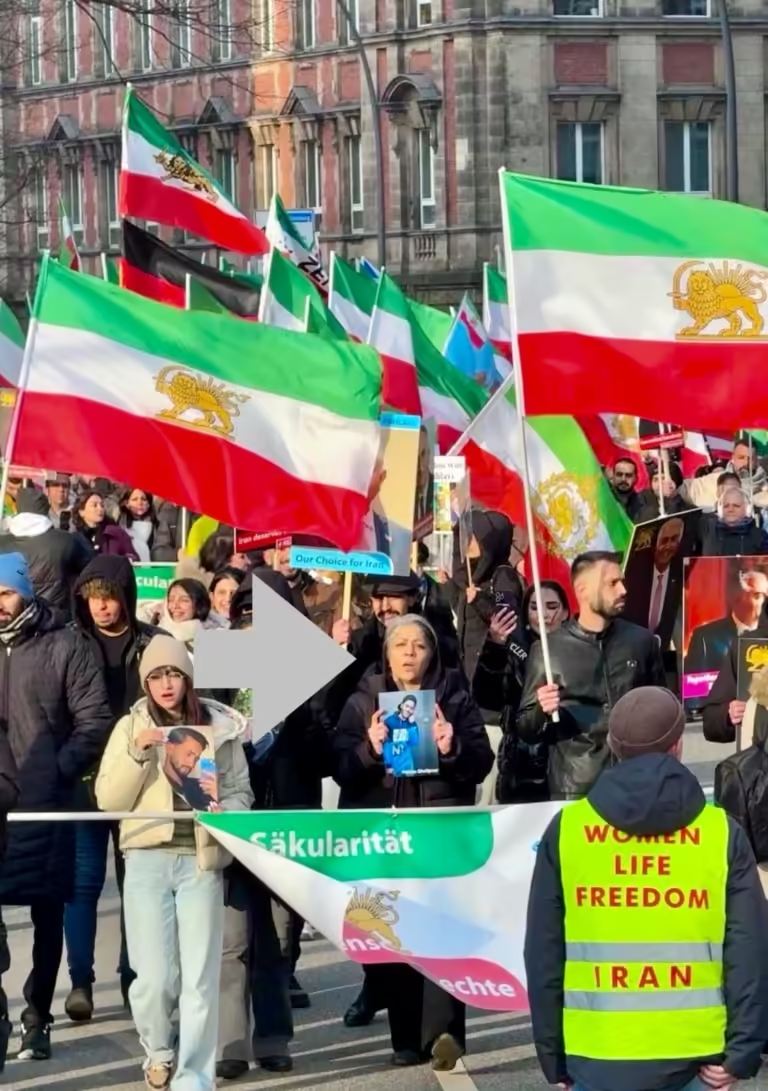
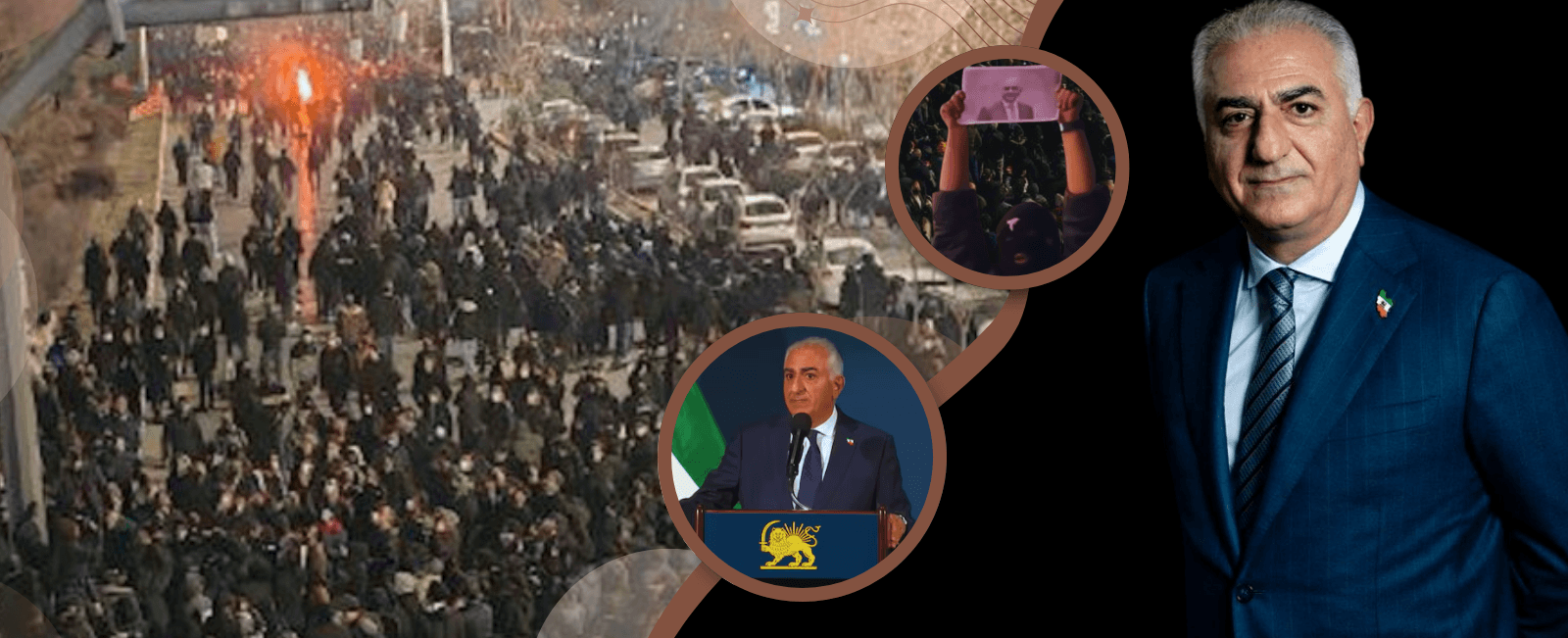
As the Islamic Republic of Iran (IRI) enters the most precarious phase of its history, a viable and organized alternative to the regime has demonstrated unprecedented strength, cohesion, and national reach. The uprising began on December 28, 2025, however, it was Crown Prince Reza Pahlavi’s subsequent call for mass mobilization that transformed localized demonstrations into a nationwide uprising. In response to his call, millions of Iranians took to the streets since January 8, triggering what appears to be the most violent crackdown in the regime’s history.
The regime’s response to this level of mass mobilization has been extraordinarily violent. More than 12,000 protesters were reportedly killed within a 48-hour period on January 8 and 9 alone, and media accounts suggest that the overall death toll may be as high as 20,000, as security forces deployed military-grade weapons against unarmed demonstrators. Such a scale of repression is not only indicative of the scale and persistence of the protests, but also reflects the regime’s acute perception of the Crown Prince and his supporters as an existential threat to its survival.
This article analyzes Crown Prince Reza Pahlavi’s role as an opposition leader and outlines his political vision, popular legitimacy, international recognition and strategic approach to ending the IRI and establishing a democratic, secular state. A transition led by the Crown Prince would have implications extending well beyond Iran, reshaping regional and global security dynamics in ways that could constitute the West’s most significant strategic gain since the fall of the Berlin Wall in 1989. Given the magnitude of the potential strategic realignment, understanding Crown Prince Reza Pahlavi as a political leader is essential for those shaping Western foreign and security policy.
Political Vision
At the core of this assessment is the Crown Prince’s articulated political vision for a post–Islamic Republic Iran. That vision is grounded in democratic self-determination, secular governance, and the protection of fundamental human rights. Central to it is the principle that the Iranian people themselves must decide the country’s future system of government through a free and fair national referendum, whether in the form of a republic or a constitutional monarchy. He has consistently emphasized that all Iranians must be able to participate meaningfully in shaping the country’s future through competitive, transparent elections and representative institutions. Rejecting both authoritarianism and revolutionary violence, the Crown Prince advocates a nonviolent, bottom-up approach to political change rooted in civic mobilization rather than elite imposition. His emphasis on peaceful transition reflects both normative democratic commitments and lessons drawn from comparative research on successful revolutions.
Beyond domestic governance, Pahlavi articulates a vision of Iran as a responsible international actor and a contributor to regional and global security. He has argued that a democratic Iran should seek constructive, neighborly relations with surrounding states and reintegrate into the international community as a partner for peace and stability. This includes a clear commitment to religious freedom and pluralism, reflected in his long-standing engagement with Iranians from diverse religious communities, including Muslims, Jews, Baháʼís, Zoroastrians and followers of the Yarsan faith. He has also stated that a post–Islamic regime Iran should move swiftly to normalize relations with Israel, including formal recognition, as part of a broader regional realignment away from ideological confrontation and toward diplomatic cooperation.
His political positions are not recent or improvised but reflect decades of sustained intellectual engagement with academic research and Iran’s history, society, and future. He has articulated his views most clearly in three books—Gozashteh va Ayandeh (2000); Winds of Change: The Future of Democracy in Iran (2002); and IRAN: L’Heure du Choix (2009)—which together outline a coherent framework for democratic transition, national reconciliation, and state rebuilding. These writings situate his vision within Iran’s historical experience and social realities, emphasizing territorial integrity, national sovereignty, and institutional continuity.
Popular Legitimacy
Importantly, the Crown Prince’s political vision has not remained confined to intellectual or exile-based discourse; it has translated into substantial popular legitimacy inside Iran. Unlike fragmented leftist factions, radical exile-based groups like Mojahedin-e Khalq, or regime-affiliated reformists, he has articulated a principled, inclusive, and forward-looking alternative that resonates across Iranian society. His consistent insistence that political leadership must never be self-appointed—and his corresponding refusal to lay claim to the Peacock Throne—has strengthened perceptions of his democratic credibility and contributed to broad-based public trust. Today, this legitimacy is increasingly visible on the streets of Iran, where millions of demonstrators across the country invoke his return as part of their demand for regime change.
His support spans the political spectrum and cuts across social, ideological, and religious divisions. It includes monarchists and republicans, secular Iranians and religious believers, and citizens from a wide range of socioeconomic backgrounds—from blue-collar workers and farmers to entrepreneurs, academics, artists, athletes, civil servants, retiree, students, and war veterans. Recent nationwide protests, extending across every province of the country, have provided tangible evidence of this breadth of support.
The national uprising that began on December 28, 2025 and was amplified by the Crown Prince’s call for mass mobilization quickly became the most geographically extensive and politically significant protest wave in the IRI’s history. Demonstrations were reported in 614 locations across 187 cities and all 31 provinces. The regime’s massacre of the protesters highlights both the seriousness of the uprising and the specific threat posed by the Crown Prince’s capacity to inspire coordinated nationwide action. Despite previous repressions, he succeeded in mobilizing millions, demonstrating not only organizational reach but also a level of popular legitimacy unmatched by other opposition figures.
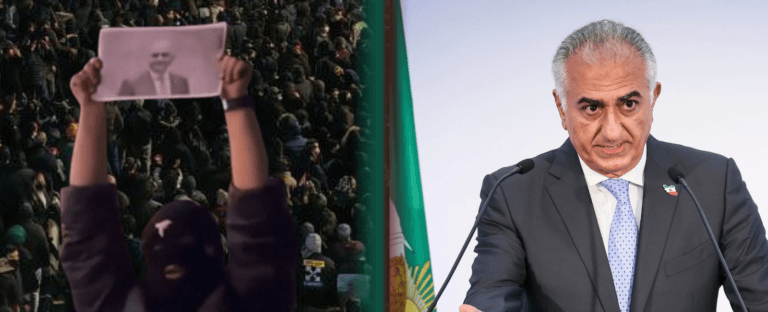
Available survey data further reinforces this assessment. In 2024, the Netherlands-based GAMAAN Institute—despite its critical posture toward the Crown Prince—found that he enjoyed the support of approximately 31 percent of Iranians. A 2023 survey conducted by the U.S.-based Empirical Research and Forecasting Institute (ERFI) placed his support significantly higher, at close to 80 percent. No other opposition figure approaches comparable levels of public backing. The Crown Prince’s visibility during protests—his portrait carried, his name chanted, and his messages widely circulated—further reflects this prominence.
Qualitative assessments from former regime insiders point in the same direction. Mehdi Nassiri, a former conservative journalist and editor-in-chief of Kayhan—which remains the principal mouthpiece of Iran’s dictator, Ali Khamenei—defected from the regime several years ago and now lives outside Iran. Drawing on his prior access to regime circles as well as his professional experience as a journalist observing Iranian society from within, Nassiri has stated that supporters of The Crown Prince constitute at least half of Iran’s population and may exceed 70 percent. His assessment—situated between existing survey results—carries particular weight given his former position and reinforces the broader conclusion that The Crown Prince commands substantial popular legitimacy among Iranians inside the country.
International Recognition
Beyond domestic legitimacy, Crown Prince Reza Pahlavi has long been a central reference point on the international political stage, a role that has become increasingly salient during the current uprising. His role has been reflected not only in diplomatic engagement but also in the way major global actors and media outlets have responded to the unfolding events in Iran.
During the protests, U.S. President Donald J. Trump publicly warned that the United States would “take very strong action” if the regime continued killing protesters. While no action has thus far followed, the episode highlighted the extent to which developments in Iran have entered high-level strategic deliberations in Washington. During this period, the Crown Prince was in contact with Steve Witkoff, signaling recognition of the Crown Prince’s relevance as a political leader.
The Crown Prince’s international engagement predates the current uprising. In 2023, he visited Israel at the invitation of its government, becoming the first Iranian dignitary to do so since 1979. The visit highlighted his stated commitment to religious freedom and his intention to rebuild Iran’s historical ties with Israel as part of a broader regional realignment. He has also maintained sustained engagement with European political institutions over many years. In 2023, he was invited to the European Parliament, where he held official meetings with members, reflecting growing recognition of his role among allies in Europe. More recently, on January 15, 2026, twelve members of the Swedish parliament issued a public statement expressing support for the Iranian protests and for the Crown Prince’s leadership—an unprecedented gesture that further illustrates the extent to which he has become a focal point for international political attention.
Media coverage has reinforced this international visibility. Amid the protests, the Crown Prince’s press conference on January 16, 2026, received extensive coverage across Western media, including both state-affiliated and private outlets. Taken together, these diplomatic engagements and media dynamics indicate that the Crown Prince’s role is not confined to domestic opposition politics. Rather, he is an unavoidable reference point in international discussions about Iran’s future trajectory.
Strategic Framework for Regime Change and Democratic Transition
In parallel to his public and diplomatic engagement, Crown Prince Reza Pahlavi has articulated a comprehensive strategic framework for dismantling the IRI and facilitating a democratic transition. Drawing on decades of study, observation, and engagement, this framework is structured around five mutually reinforcing pillars: maximum pressure, maximum support, maximum defection, maximum mobilization, and a detailed post-regime reconstruction plan. Together, these elements form a coherent and multidimensional roadmap designed not only to weaken the regime’s capacity for repression but also to mitigate the risks associated with political transition.
The first pillar emphasizes the application of maximum pressure on the regime by democratic governments to erode its coercive and financial capabilities. Proposed measures include economic sanctions, diplomatic isolation, and the designation of the Islamic Revolutionary Guard Corps (IRGC) as a terrorist organization. The regime’s extreme violence in response to recent mass mobilization has intensified international scrutiny and reinforced arguments that appeasement policies have failed to change the behavior of the regime. Within this framework, sustained external pressure is intended to increase the costs of continued violence and accelerate internal fractures within the ruling elite.
Complementing this approach, the second pillar focuses on maximum support for the Iranian people. The Crown Prince has called on international actors to facilitate civil resistance and civic mobilization by enabling secure communications, countering the regime’s global propaganda networks, and providing protection for dissidents both inside Iran and in exile. Public warnings issued by former U.S. President Donald J. Trump during the protests illustrate one form of such support; however, beyond verbal statements, no concrete measures have thus far been implemented. In strategic terms, external support is designed to reduce the personal and collective risks associated with participation in protests and resistance activities.
The third pillar centers on maximum defections from within the regime’s armed forces, intelligence, and bureaucratic institutions. The Crown Prince has repeatedly appealed to individuals within these structures to withdraw their loyalty from the IRI. A secure communication platform has reportedly enabled contact from tens of thousands of individuals inside state institutions. Such defections weaken the regime’s ability to govern and repress and are critical for preventing institutional collapse during a transition. Here, the interaction between maximum pressure and maximum support is central: while pressure raises the costs of continued loyalty to the regime, support lowers the perceived risks of defection.
Sustaining momentum over time requires the transformation of spontaneous unrest into organized resistance, which constitutes the fourth pillar of the strategy, maximum mobilization. Inside Iran, opposition organization has taken a predominantly horizontal form, consisting of loosely connected cells operating as decentralized networks. This structure reduces vulnerability to infiltration by regime intelligence services and limits the damage caused by arrests. Despite this decentralization, recent protests have demonstrated a notable degree of coordination, with disparate groups responding to common calls for action issued by the Crown Prince since January 8. Outside Iran, numerous exile-based organizations support his leadership. While each maintains its own internal hierarchy, these organizations function collectively as a network rather than a single centralized structure, an adaptive response to the IRI’s sustained use of surveillance, intimidation, cyber intrusion, and terrorism against dissidents abroad.
The fifth pillar addresses the post-Islamic regime vision. The Crown Prince has consistently argued that the collapse of the IRI must not result in political chaos or institutional vacuum. Accordingly, he has overseen the development of a detailed post-regime blueprint covering political transition, economic stabilization, security-sector reform, foreign policy realignment, and the restoration of essential public services, including healthcare, education, infrastructure, and environmental management. Central to this phase is a commitment to a national referendum allowing the population to determine Iran’s future system of governance—whether a republic or a constitutional monarchy—followed by free and competitive elections. In this way, the strategy frames regime change not as an endpoint, but as the opening phase of a democratic process.
Conclusions
Iran is entering a period of profound uncertainty in which long-standing assumptions about regime durability and opposition weakness no longer hold. The scale of recent mass mobilization, the regime’s extraordinary resort to violence, and the convergence of domestic legitimacy with sustained international attention have fundamentally altered the strategic landscape. In this context, Crown Prince Reza Pahlavi stands out not simply as a symbolic figure, but as a political leader whose vision, support base, and strategic framework warrant serious consideration.
This article has shown that the Crown Prince’s relevance rests on three interrelated foundations: a clearly articulated democratic vision rooted in popular sovereignty; demonstrable popular legitimacy inside Iran, cutting across social, regional ideological, and religious lines; and continued recognition on the international stage. Together, these elements distinguish his role from that of other opposition figures and help explain why the regime increasingly frames his leadership as an existential threat.
Equally important is the strategic coherence of the framework articulated under his leadership. By integrating external pressure, international support for civil resistance, internal defections, organized mass mobilization, and a detailed post-regime transition plan, the strategy addresses both the challenge of ending authoritarian rule and the risks associated with regime change. In doing so, it aligns Iran’s opposition dynamics with comparative research on successful nonviolent transitions while emphasizing institutional continuity and democratic values.
For Western policymakers, the implications are substantial. A democratic transition in Iran would not only transform the country’s internal political order, but also reshape regional and global security dynamics in ways that could constitute the West’s most significant strategic gain since the fall of the Berlin Wall in 1989. As such, continued reliance on reactive or minimalist policies risks missing a historic opportunity.
Understanding Crown Prince Reza Pahlavi as a political leader, therefore, is not a matter of preference or endorsement, but of strategic relevance. As events in Iran continue to unfold, the extent to which external actors recognize and engage with the realities described in this article may prove consequential not only for Iran’s future, but for the broader international order.