Who Is the Man Behind Iran’s New Supreme Leadership
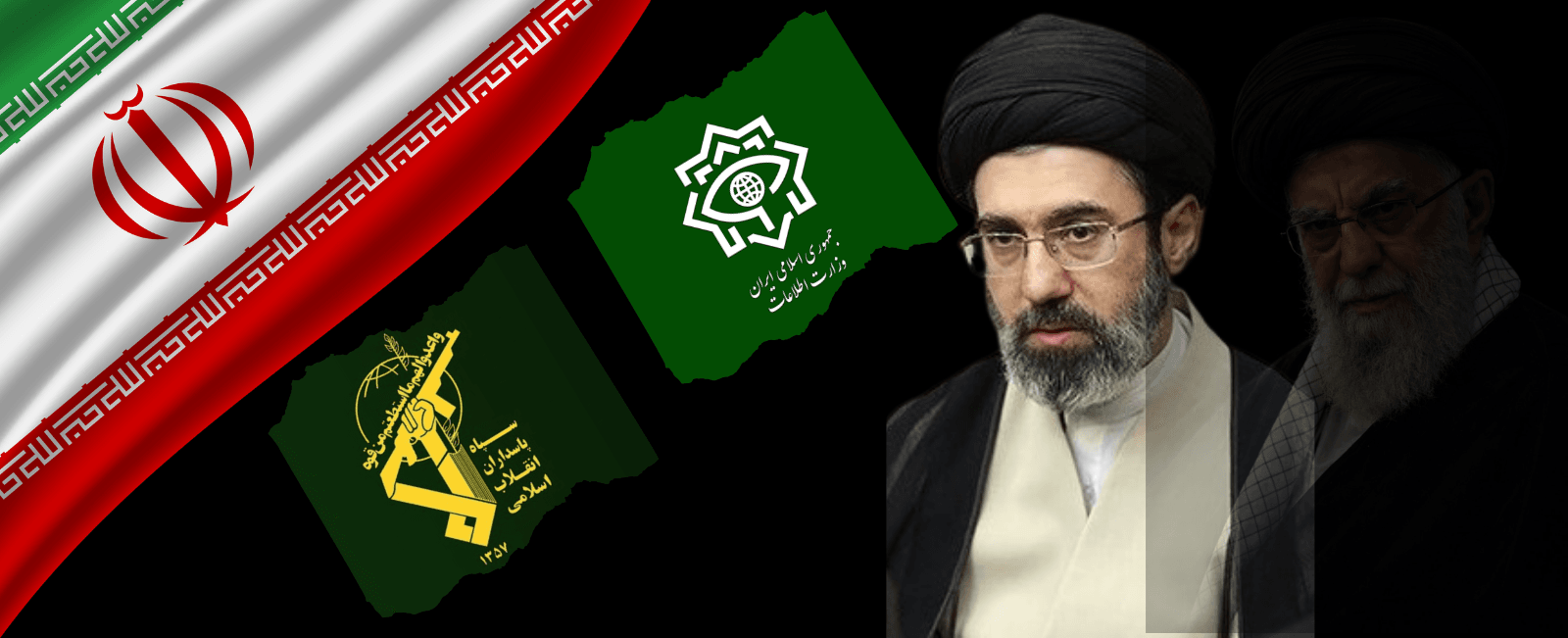
Mojtaba Khamenei’s rise to Iran’s supreme leadership represents the consolidation of dynastic power within the Islamic Republic. Long operating behind the scenes through the Supreme Leader’s office and the Islamic Revolutionary Guards, he has been widely viewed as the most likely successor to his father. His leadership signals continuity with the regime’s totalitarian structure and suggests a further entrenchment of the system that has dominated Iran for decades.
The designation of Mojtaba Khamenei as Iran’s new Supreme Leader marks the consolidation of a dynastic transfer of power within one of the world’s most totalitarian systems. While his father, Ali Khamenei, ruled the Islamic Republic for 36 years, Mojtaba has long operated in the shadows of the regime’s power structure. His rise signals continuity rather than change, and most likely an even deeper entrenchment of the system his father built.
A Brief Biography
Mojtaba Khamenei was born in 1969 in Mashhad, Iran. According to the Iranian state-affiliated Tasnim News Agency, he pursued religious studies in Tehran before continuing his clerical education in Qom, the center of Shiite scholarship. He studied under several prominent clerics and reportedly spent many years attending advanced theological courses in Islamic jurisprudence and principles.
Tasnim portrays him as a serious religious scholar and teacher, claiming he taught advanced seminary courses and cultivated many students in Qom. The same source emphasizes his connections to prominent clerics and his involvement in religious institutions and scholarly networks.
Yet despite this carefully constructed religious profile, Mojtaba has never held a formal position in Iran’s political system. His influence has instead been exercised informally through the office of the Supreme Leader and through the Islamic Revolutionary Guard Corps, to which he is closely connected.
The Man Who Remained Invisible
Unlike most senior figures in the Islamic Republic, Mojtaba Khamenei has spent much of his political life in deliberate anonymity.
He rarely appears in public, grants no interviews, and maintains no official political role. Nevertheless, insiders and analysts have long described him as one of the most powerful figures operating within the inner circle of the Supreme Leader’s office.
In fact, Mojtaba has frequently been described as a de facto power broker within the regime’s core institutions. His influence over the Supreme Leader’s office—an institution that functions as a vast shadow government with its own intelligence, security, and propaganda apparatus—has been widely noted by observers. Whoever controls this office effectively controls the central nerve system of the Islamic Republic.
For years, Mojtaba Khamenei has therefore been widely regarded as the most likely successor
Ties to the United Kingdom
Despite the Islamic Republic’s relentless anti-Western rhetoric, Mojtaba Khamenei’s personal history includes notable connections to the United Kingdom.
According to reporting by The Telegraph, Mojtaba traveled to London in 1998 for a two-month stay at a luxury hotel in Park Lane. The visit reportedly involved a large entourage of bodyguards and associates and was connected to fertility treatment for his wife, Zahra Haddad-Adel. She was later killed, together with Ali Khamenei, in the U.S.–Israeli bombing of the Supreme Leader’s residence on February 28.
The same reporting suggests that Mojtaba has maintained financial and property connections to Europe, including property holdings and financial networks linked to London-based assets. Investigations have claimed that assets connected to him may include property investments worth tens of millions of pounds and complex financial structures operating through shell companies.
The existence of financial networks and property linked to Mojtaba Khamenei in London raises uncomfortable questions for Western governments. British authorities have long been aware that figures connected to the leadership of the Islamic Republic maintain assets and financial structures within the United Kingdom. Yet little meaningful action has followed. Allowing individuals tied to a regime responsible for repression at home and destabilization abroad to quietly safeguard wealth in Western financial systems reflects a troubling inconsistency in Western policy, particularly in Britain, where these networks have been allowed to operate with remarkable freedom.
A Tyrant in the Making?
Ali Khamenei presided over one of the most repressive political systems in the world, overseeing the expansion of the Revolutionary Guards, the suppression of domestic dissent, aggressive regional policies across the Middle East, as well as a global campaign of terrorism, espionage, kidnappings, and assassination plots targeting dissidents and opponents in Europe and North America.
Whether he proves even more totalitarian than his father remains to be seen. But given his longstanding role within the regime’s security and ideological networks, there is little reason to expect a departure from the trajectory that has defined the Islamic Republic for more than four decades.
If anything, Mojtaba Khamenei’s rise may represent the culmination of a system that increasingly concentrates power in fewer hands—ultimately transforming Iran’s revolutionary state into a dynastic totalitarian regime.